The Time Capsule Beneath the Jungle: 5 Surprising Truths About the Tulum’s Hidden Rivers
Tulum is world-renowned for its turquoise waters and white sand beaches, but beneath the feet of millions of tourists lies an "endless labyrinth" that few will ever see. Explorers like Robbie Schmittner and Guillermo de Anda have spent decades mapping the Great Mayan Aquifer, a subterranean world of flooded caves that acts as both a graveyard for Ice Age giants and a blueprint for ancient Mayan cities.
This is a world of giants and ghosts, where the ground beneath the Yucatán is more water than stone. What researchers are finding suggests a massive, interconnected life-support system that holds the secrets of our past and the keys to the region's future. To find it, teams led by Schmittner, Phillip Lehman, Rosso Rivera, and Patrick Widmann have spent weeks hacking through dense jungle with machetes, chasing rumors of "small holes in the ground" that lead to submerged cathedrals.
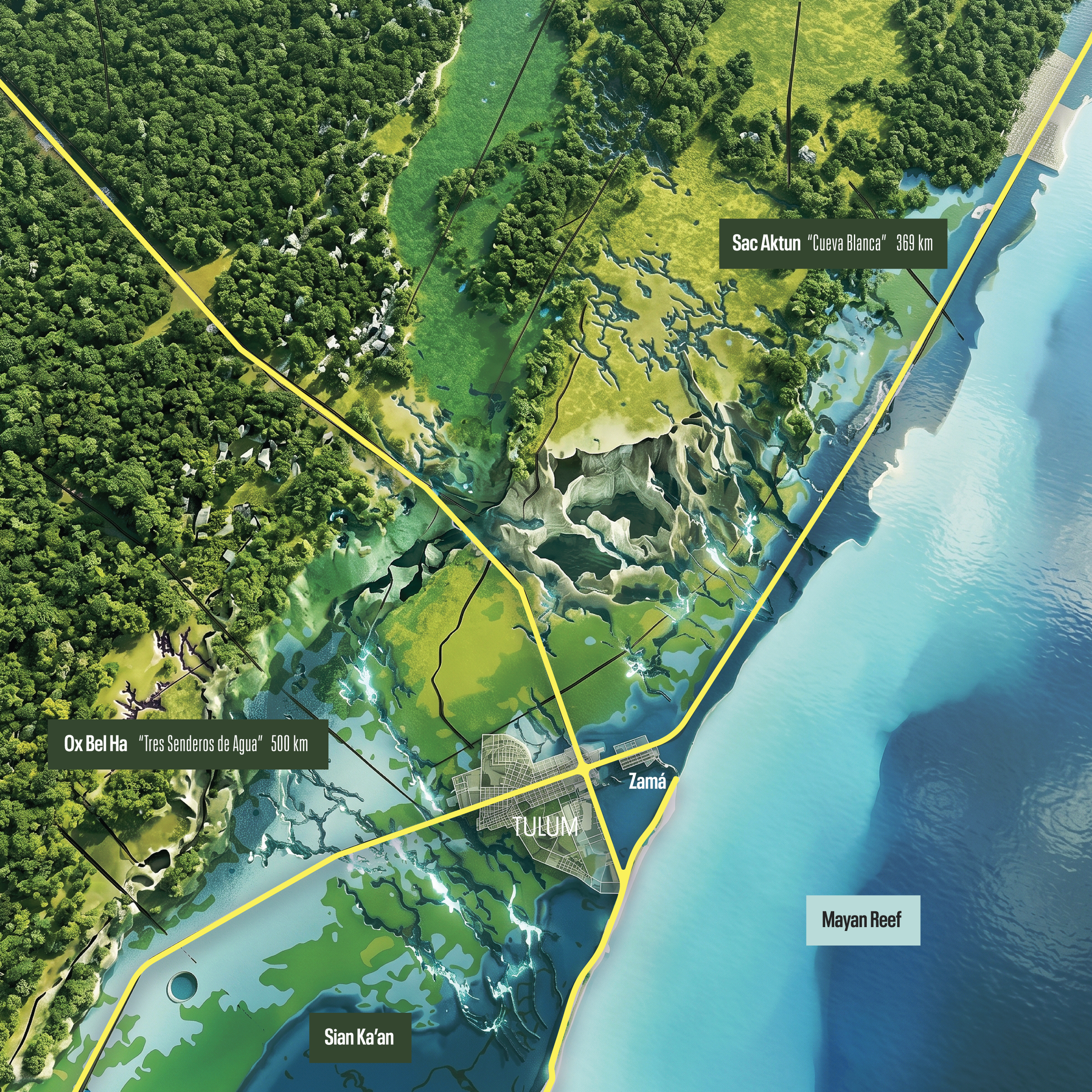
The urban area of Tulum is located between two extensive underwater cave systems called Sac Aktun and Ox Bel Ha. Data from: INEGI / QRSS
1. The "31-Meter" Mystery and the Human Metric of Records
In the world of hydrogeology, distance is the ultimate currency. Currently, Tulum is home to the two longest underwater cave systems on the planet: Ox Bel Ha (541.7 km) and Sac Actun (386.1 km). However, a counter-intuitive reality governs these records: two systems are not considered "connected" until a human being physically passes through a navigable passage from one to the other.
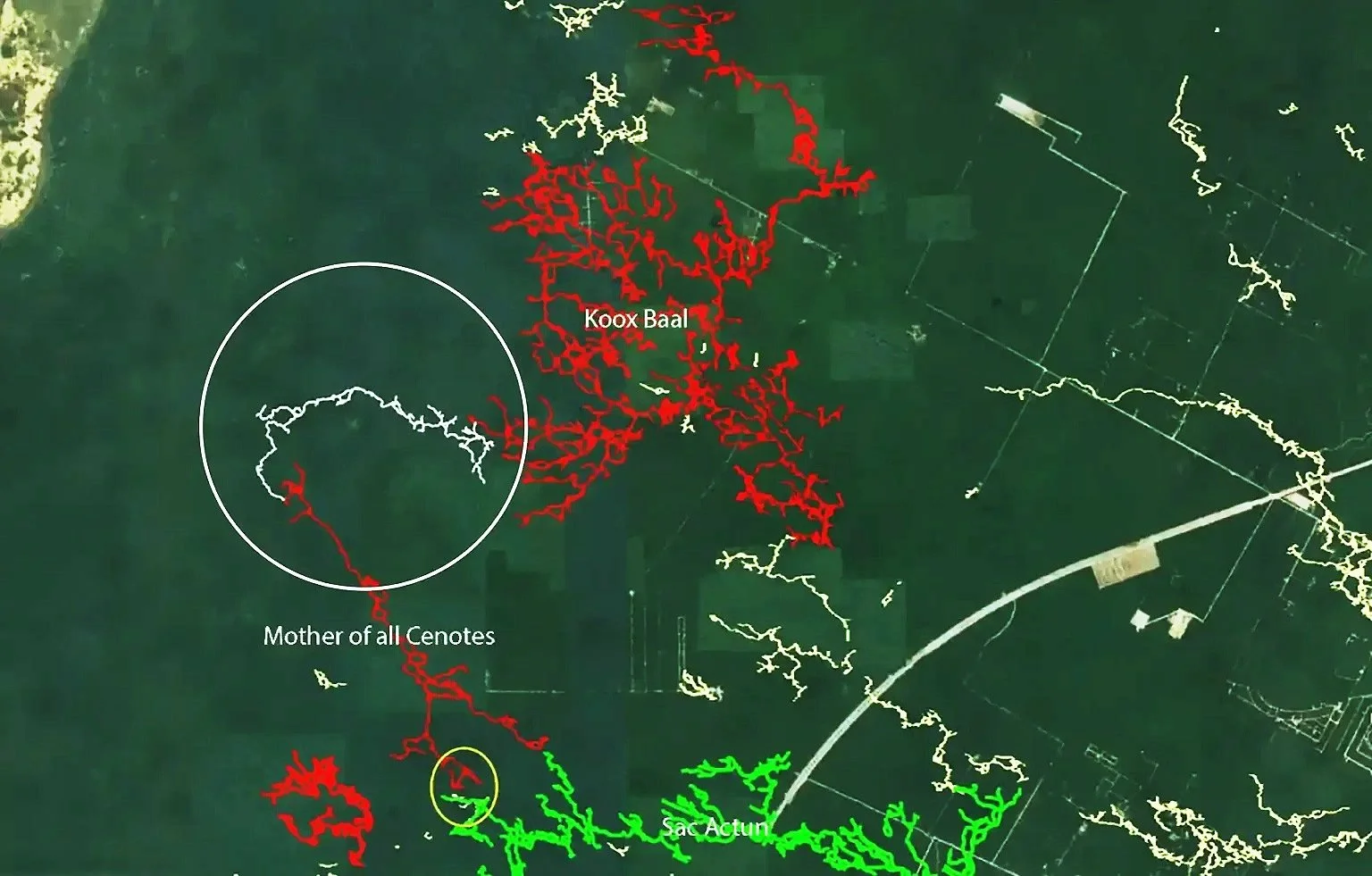
In early 2025, Schmittner’s team achieved a major milestone by connecting the "Mother of All Cenotes" with the Koox Baal system, the site where Schmittner’s exploration career began in 1996. This connection, staged out of the fish-rich "Sushi Cenote," created a network over 120 km long. Tantalizingly, this new system sits just 31 meters (100 ft) away from the gargantuan Sac Actun. While water flow and dye tests prove they are hydrologically one, the physical gap remains. If the team finds a way to squeeze through the halocline (the shimmering mixing zone of salt and freshwater) across those final 31 meters, the resulting system would exceed 500 km, potentially making it the largest cave system on Earth.
"The caves hide their secrets well but, if you keep pushing, they eventually let you in." — Robbie Schmittner
--------------------------------------------------------------------------------
2. Cenotes are Astronomical Observatories, Not Just Wells
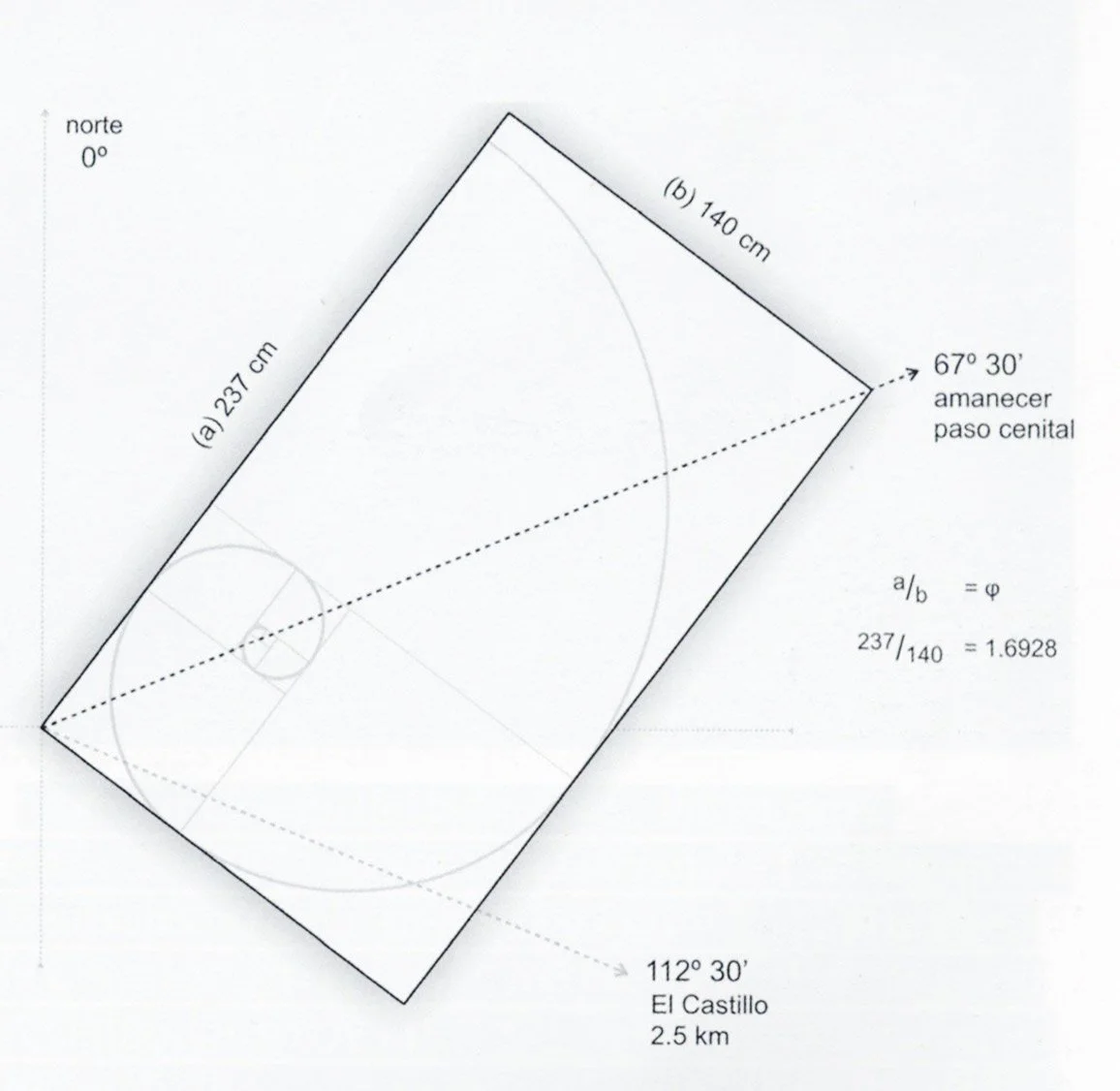
While cenotes are often viewed as simple natural wells, archaeological evidence from Cenote Holtun and Chichén Itzá reveals they were sophisticated scientific tools. The Maya utilized the "cenital passage" of the sun (a biannual event where the sun reaches its highest point) to calibrate their calendars.
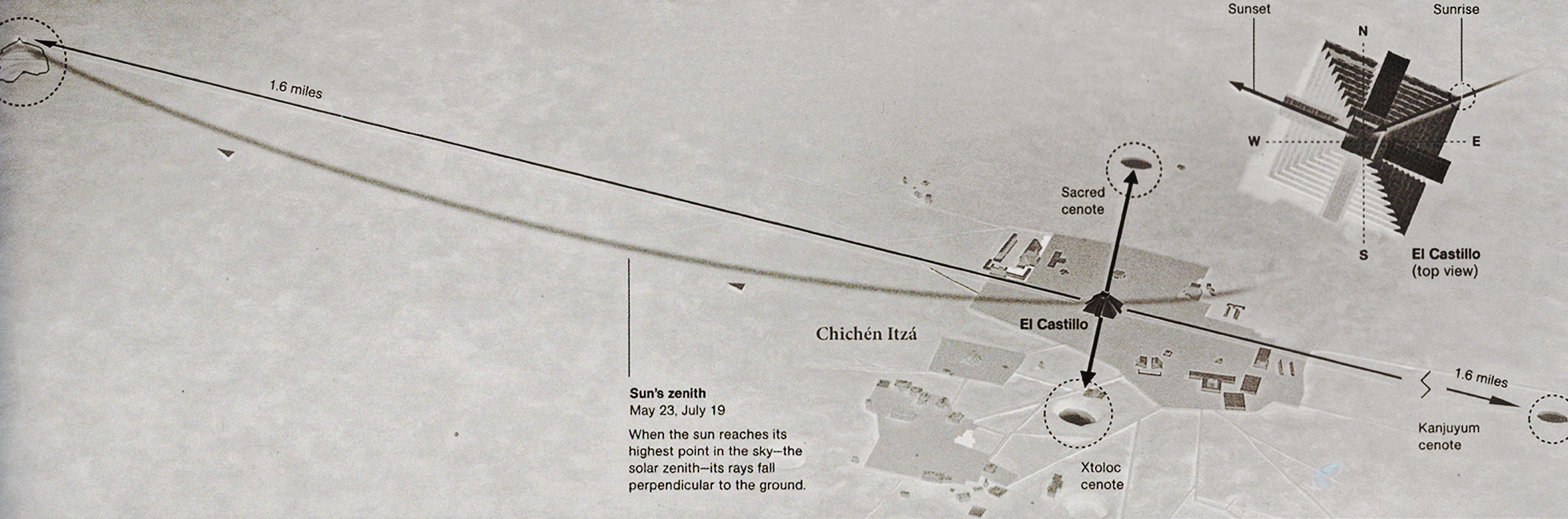
Illustration - Exploraciones del mundo subterráneo acuífero de la península de Yucatán.
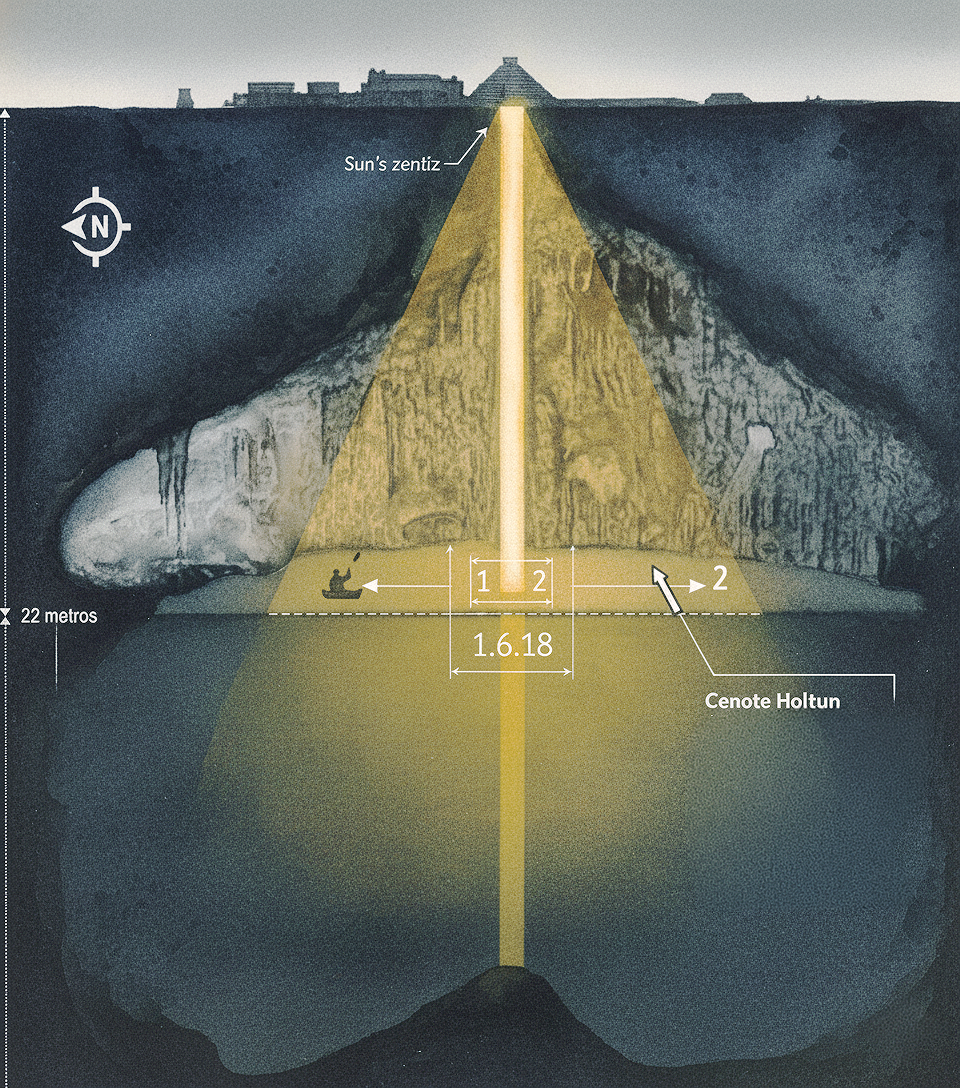
Illustration - Exploraciones del mundo subterráneo acuífero de la península de Yucatán.
At Cenote Holtun, the mouth of the cenote was likely engineered to create a rectangular beam of light with proportions nearing the golden ratio. When the sun is directly overhead, this beam hits the water with mathematical precision, acting as a "dark chamber" observatory. This precision dictated the very layout of the Mayan world. The "El Castillo" pyramid at Chichén Itzá was designed as an axis mundi, positioned precisely at the intersection of four major cenotes: Sagrado (North), Xtoloc (South), Holtun (West), and Kanjuyum (East). This alignment allowed the terrestrial world to remain in perfect sync with the cosmos.
3. A Paleolithic "Tragedy" in the Dark
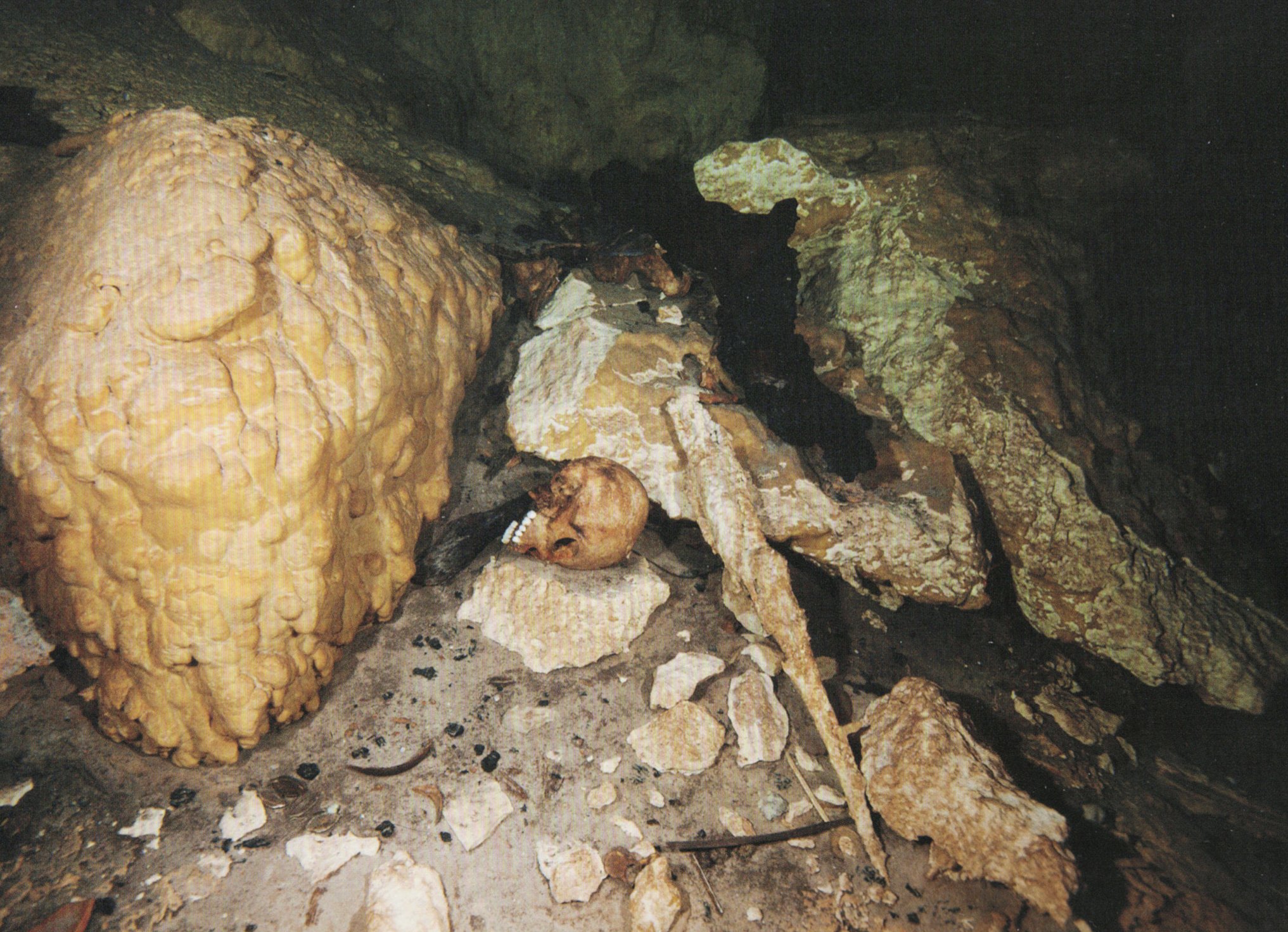
The deep, oxygen-free pits of the Yucatán serve as the world's most important submerged archaeological sites, preserving a moment in time (the Pleistocene-Holocene boundary) lost on the surface. In the Hoyo Negro pit, divers discovered "Naia," a teenager who lived 13,000 years ago, surrounded by extinct megafauna like gonphotheres (Ice Age relatives of the mastodon), giant sloths, bears, and saber-toothed tigers.
Equally significant is the "Eve of Naharon," discovered in the Naranjal subsystem of Ox Bel Ha. Dated to 13,454±117 cal BP, this 18-to-20-year-old woman represents some of the oldest human remains in the Americas. These caves were not merely accidental traps; sites like the Muknal cave, where the "Muknal Grandfather" (9,600 cal BP) was found with evidence of a secondary burial, suggest the Maya viewed these chambers as ritual spaces. To the Maya, this was the "great útero of the mother earth," a sacred place where life and death existed in a perpetual cycle.
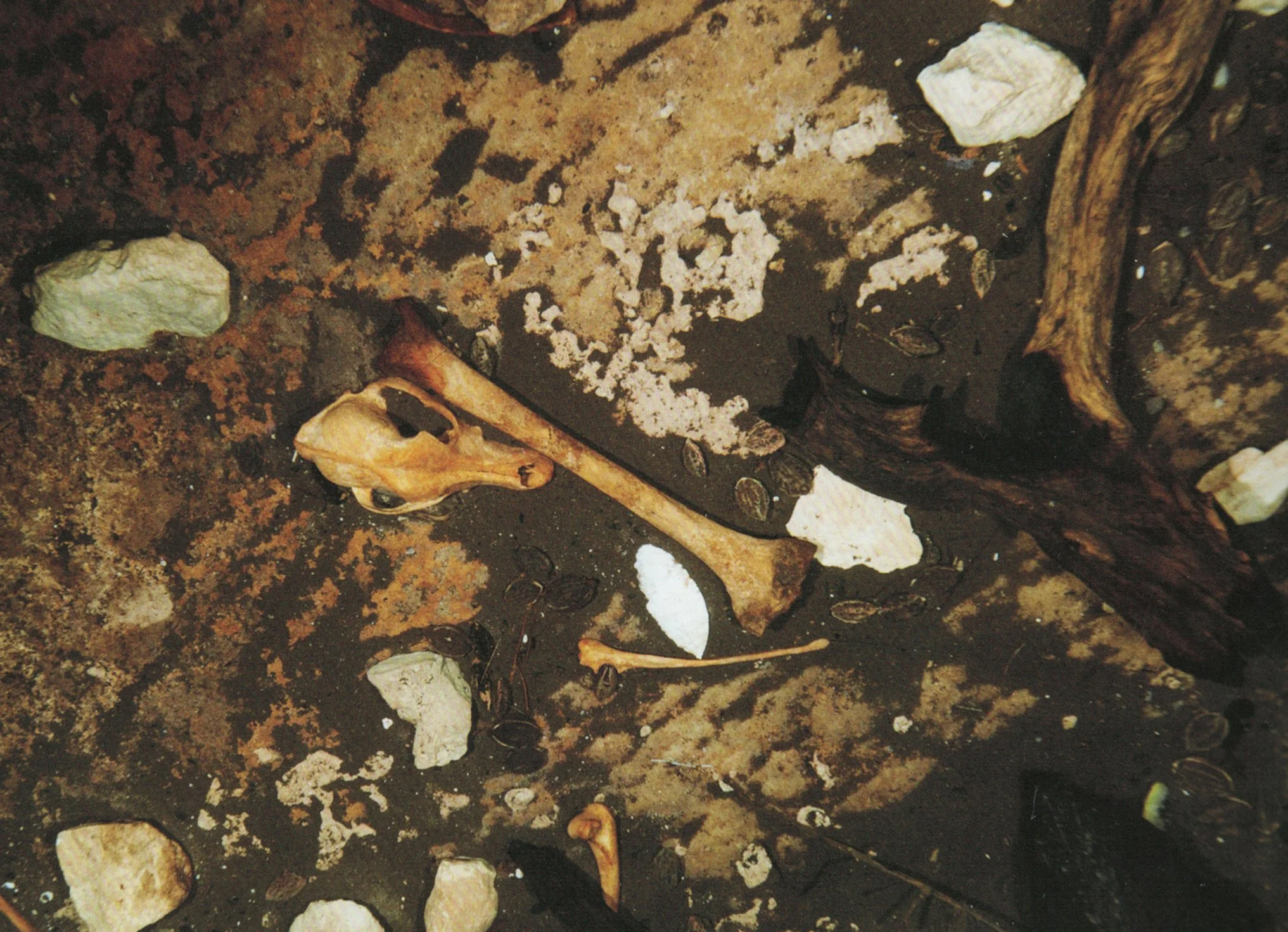
Exploraciones del Mundo Subterráneo - Guillermo de Anda
--------------------------------------------------------------------------------
4. The "Giant Straw" Effect and Continental Hydraulics
Tulum's and the Yucatan Peninsule hydrology operates on a scale of "continental hydraulics." Schmittner’s research identifies five major fracture zones: the Ring of Cenotes, the Sierrita de Ticul, Río Hondo, Holbox, and Akumal, which act as massive mother rivers beneath the stone.
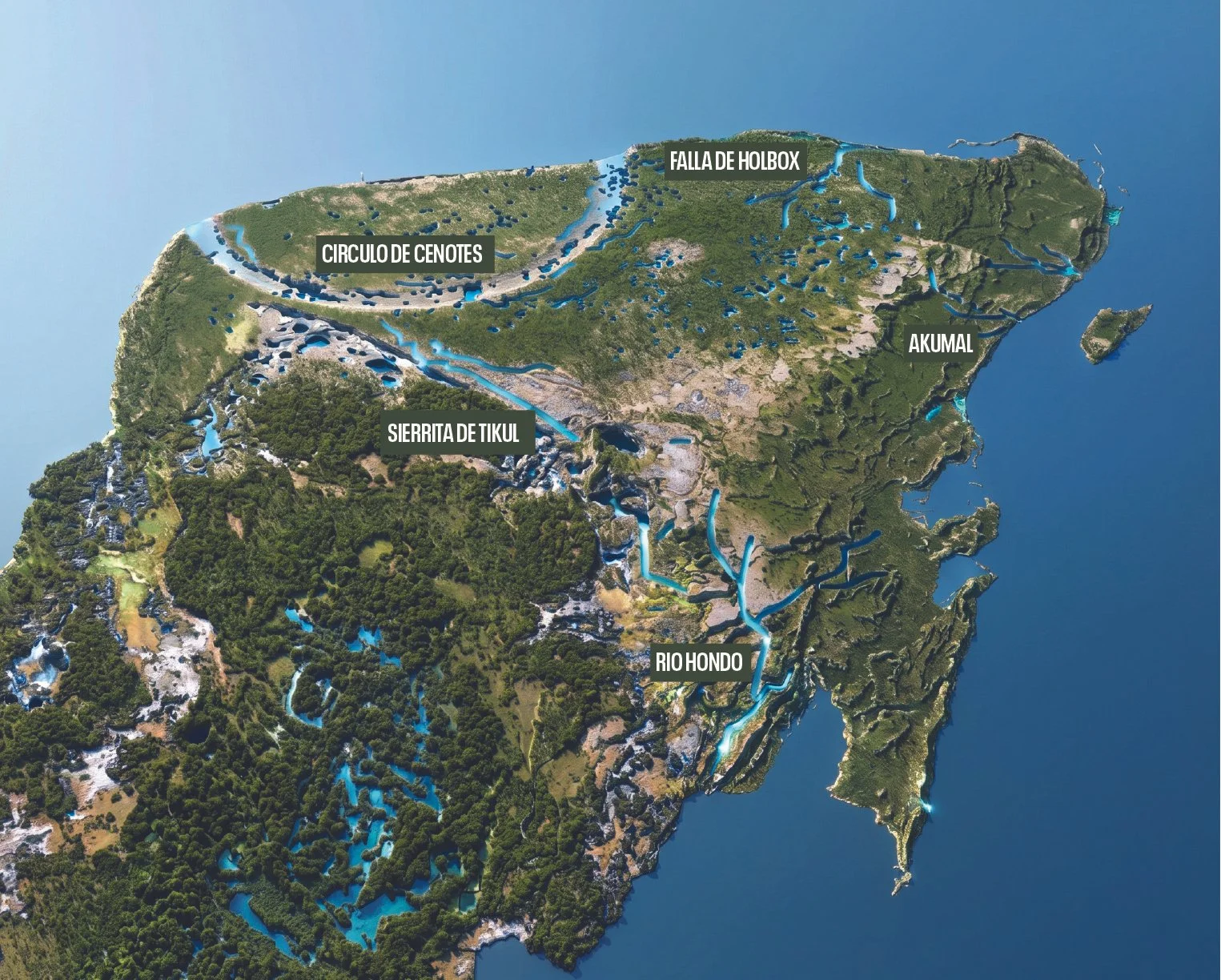
These rivers are subject to a "Venturi effect" driven by the Yucatán Channel between Cuba and Mexico. As one of the strongest currents in the world, the channel acts like a giant straw, creating a pressure differential that sucks freshwater out of the peninsula and into the Caribbean Sea. This high-speed interconnectedness means the aquifer is the "lifeblood" of the region, but it carries a dire environmental warning: contamination from sewage or toxins moves through these veins at an alarming rate. Because the water flows so fast and so far, a spill in the jungle can reach the reef in days, threatening the drinking water for the entire peninsula.
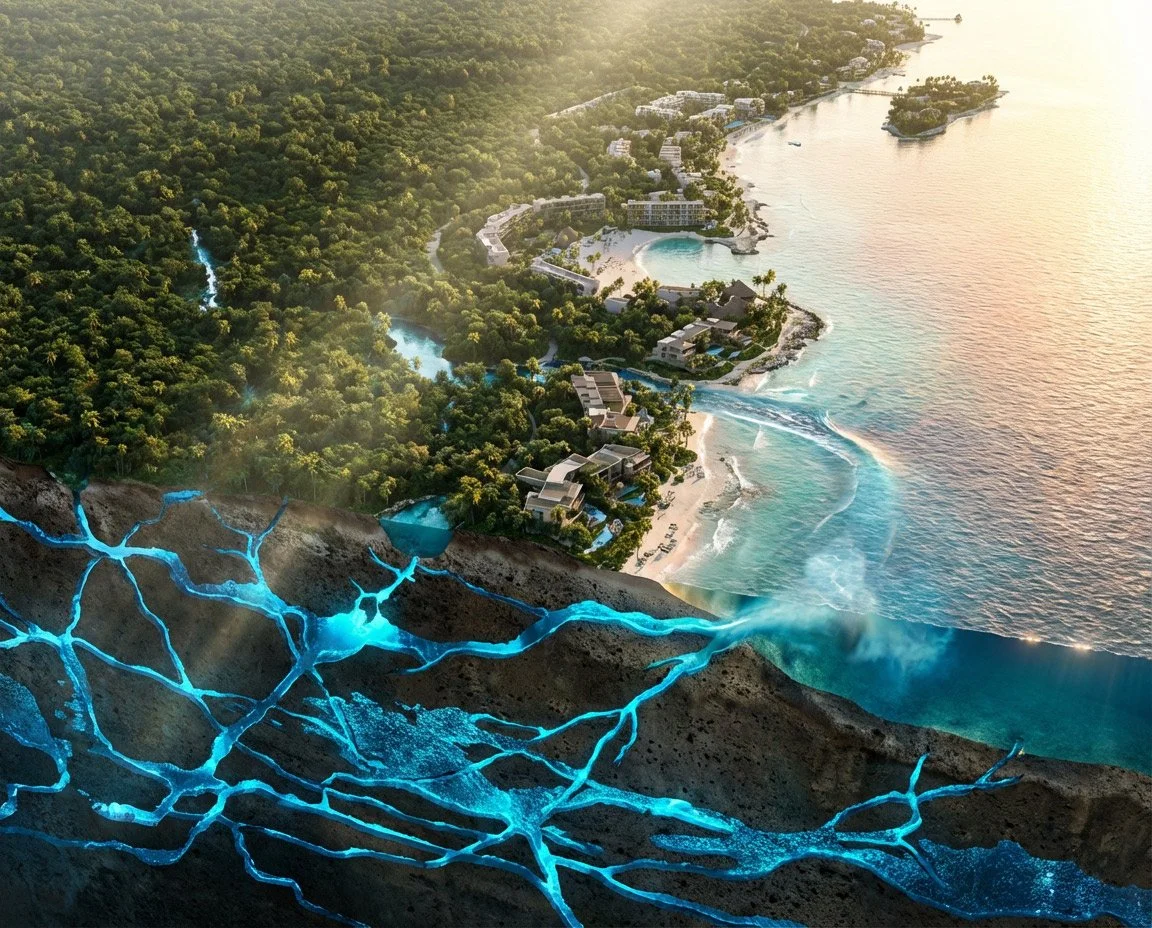
These rivers are subject to a "Venturi effect" driven by the Yucatán Channel between Cuba and Mexico. As one of the strongest currents in the world,
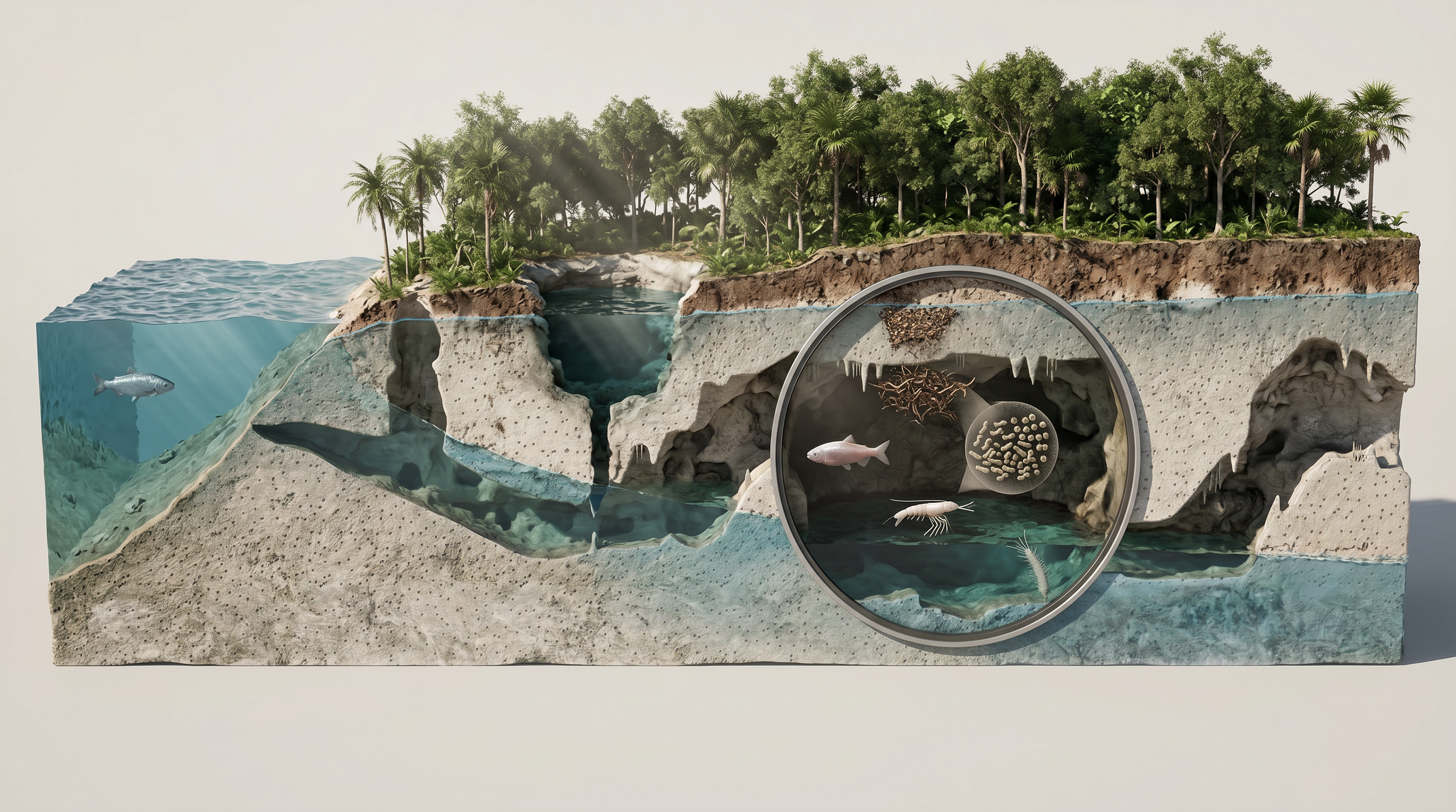
Stormwater provides underwater caves with an influx of oxygen that is critical to supporting microorganisms (an integral part of the food web) and limiting the release of harmful greenhouse gases into the ocean and atmosphere.
--------------------------------------------------------------------------------
5. Technology Turned "Pressure Cookers" into "Studios"
For decades, cave exploration was a sport of adrenaline. Using "open-circuit" gear, divers were under constant pressure, limited to two-hour "penetration" dives. The introduction of the "Sidewinder" rebreather and digital survey tools like the MNEMO has transformed exploration into a methodical science.
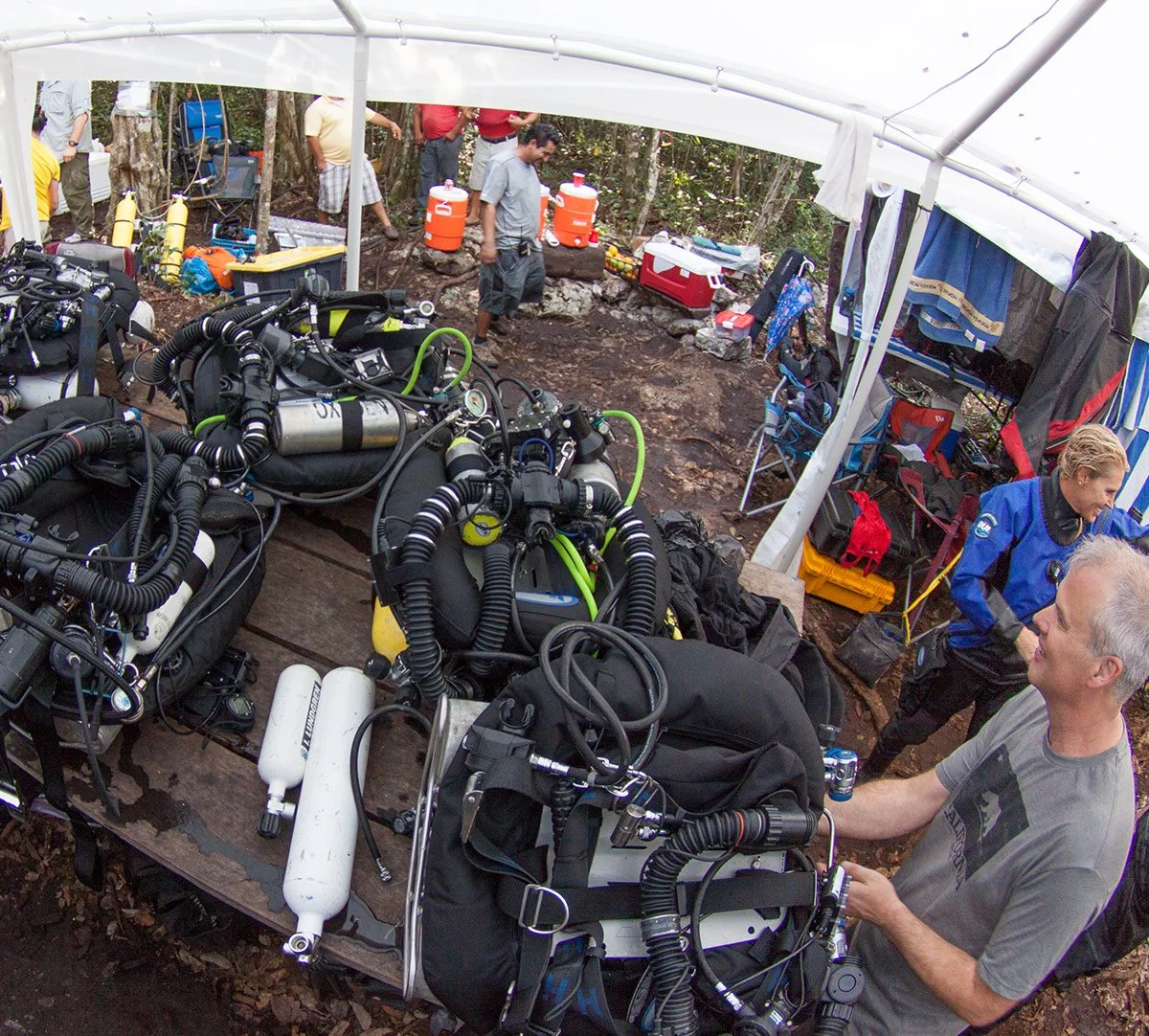
Rebreathers eliminate bubbles, which prevents percolation: the process where exhaled air knocks sediment off the ceiling and ruins visibility. This silence and perfect buoyancy allow explorers to "feel the flow" of the water to find hidden connections. On the seven-hour dive that connected Koox Baal to the Mother of All Cenotes, the team of Widmann, Lehman, and Schmittner operated with a fluid, ego-free dynamic—even starting the dive with a game of rock-paper-scissors to decide who would lead the line. By moving from the "pressure cooker" of air management to the "studio" of 7-hour scientific missions, they have turned exploration into a tool for understanding the region’s biodiversity, including unique stygobitic species that exist nowhere else on Earth.
"I was the weakest link in my own project... I was wrong. Completely wrong." — Robbie Schmittner, on his initial resistance to rebreather technology.
The Fragile Future of Xibalba
The flooded caves of Tulum are geological veins carrying both the history of the first Americans and the future of Mexico’s water supply. They are the foundation of a massive tourism economy, yet that very economy threatens to contaminate the water that sustains it.
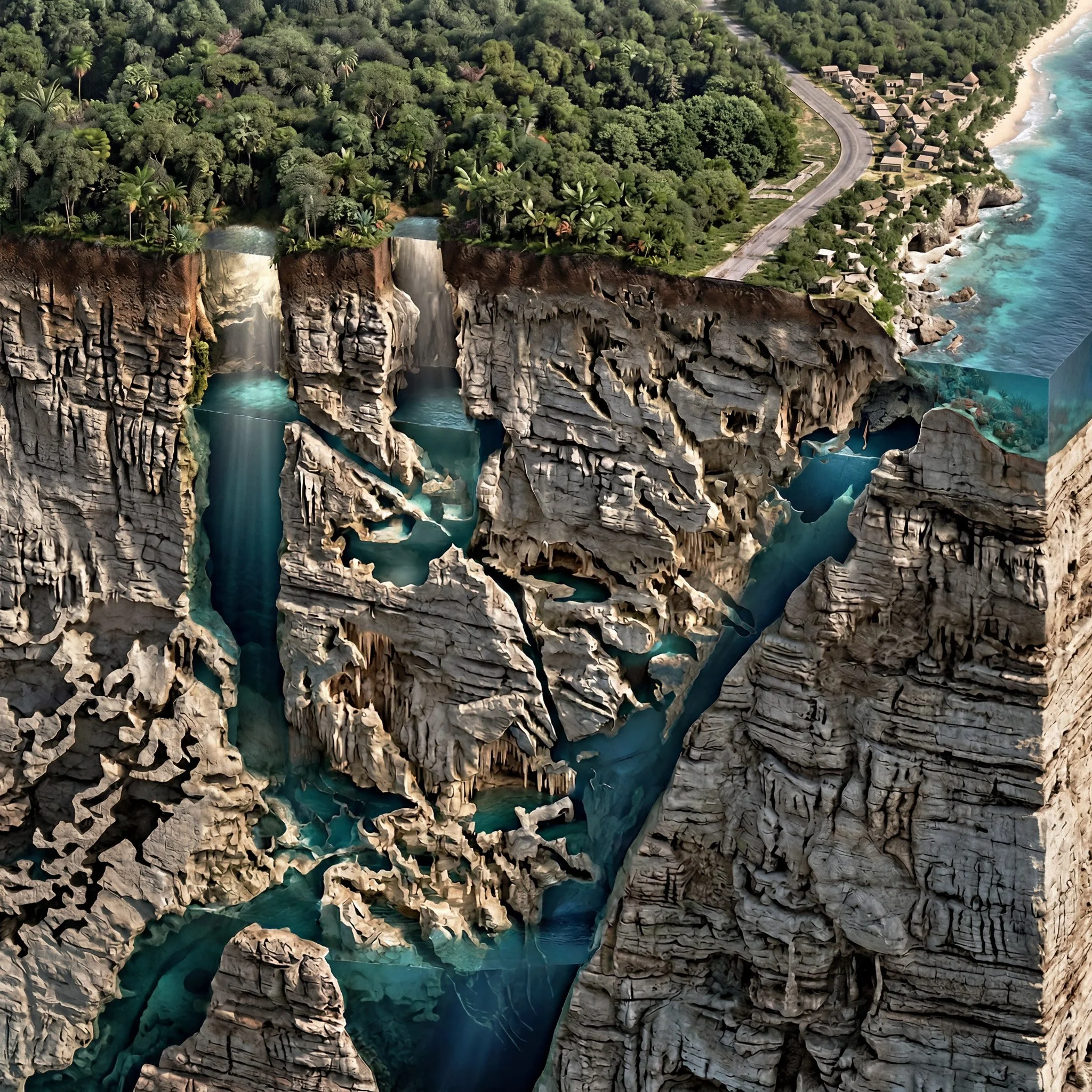
As we continue to map these "time capsules" beneath the jungle, we are faced with a vital question: can we find a balance between the world above and the fragile, hidden rivers of the underworld? The survival of the reef, the rainforest, and the people depends on whether we treat the Great Mayan Aquifer as a resource to be mined or a heritage to be protected.